


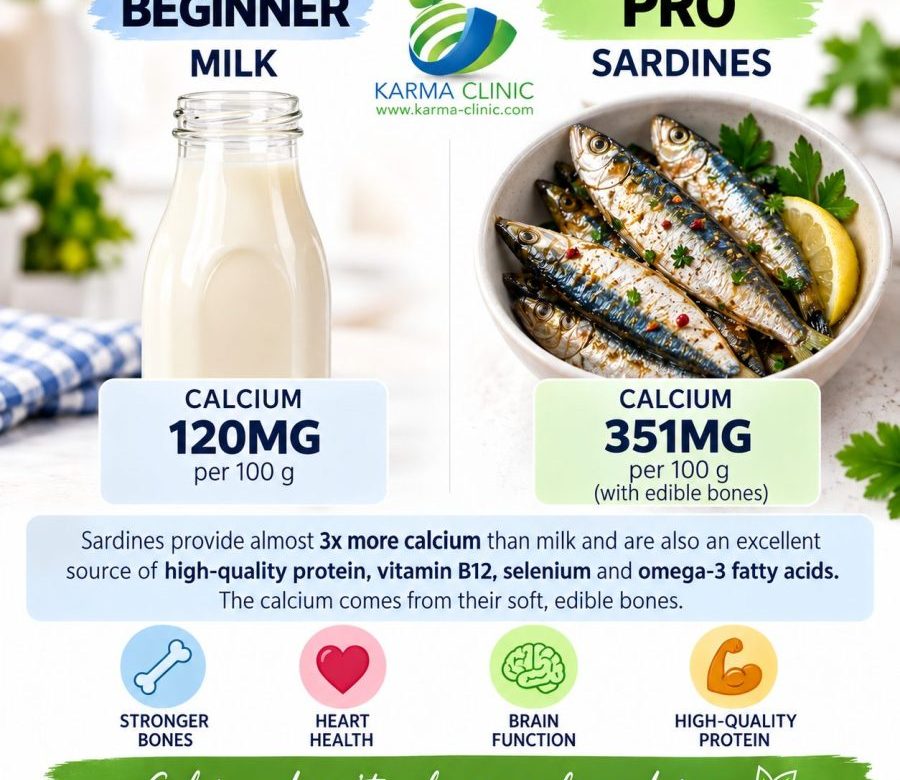
When we think about calcium-rich foods, milk is usually one of the first foods that comes to mind. But milk is certainly not the only option.
Sardines with edible bones can contain considerably more calcium per 100 g than milk, while also providing protein, omega-3 fatty acids and several important micronutrients.
For anyone following a healthy diet in Malta, sardines are particularly interesting because they fit naturally into the Mediterranean way of eating.
Milk vs Sardines: Calcium Comparison
A typical comparison looks like this:
Milk: approximately 120 mg of calcium per 100 g
Sardines with edible bones: approximately 350 mg of calcium per 100 g, although the exact amount varies depending on the product and preparation.
This means that some sardines with edible bones can provide almost three times as much calcium per 100 g as milk.
The reason is simple: the small, soft bones of sardines are eaten together with the fish, and these bones are naturally rich in calcium.
Why Are Sardines So Nutritious?
Sardines are much more than a source of calcium. They are a nutrient-dense food providing important nutrients including:
- High-quality protein – important for maintaining muscle mass and supporting satiety.
- Omega-3 fatty acids – particularly EPA and DHA.
- Vitamin B12 – important for normal red blood cell formation and nervous-system function.
- Selenium – an essential mineral involved in normal thyroid and immune function.
- Calcium – particularly when the soft bones are eaten.
For these reasons, sardines can be an excellent addition to a balanced Mediterranean diet.
Are Sardines Good for Weight Loss and Slimming?
Sardines can certainly form part of a healthy weight-loss or slimming diet, but no individual food causes weight loss on its own.
Their high protein content can help make meals more satisfying, which may help with appetite management when incorporated into an appropriately structured diet.
The key to successful weight management remains the overall nutritional pattern, portion sizes, energy intake, physical activity, lifestyle and individual requirements.
At Karma Clinic Malta, our approach to nutrition and weight management is based on the individual rather than simply categorising foods as “good” or “bad.”
Should You Replace Milk With Sardines?
Not necessarily.
Milk and dairy products can be valuable sources of calcium, protein and other nutrients. Sardines simply demonstrate that calcium does not have to come exclusively from dairy products.
A healthy diet should ideally contain a variety of nutrient-rich foods appropriate to your individual nutritional requirements.
If you do not consume dairy products, other calcium-containing foods can also contribute towards your daily intake.
Nutritionist Tip: Eat the Sardine Bones
There is one important detail if you’re choosing sardines specifically for their calcium content.
Choose sardines with their soft edible bones intact.
Much of their calcium comes from these bones. Boneless sardine fillets therefore contain considerably less calcium than sardines eaten with their bones.
When buying canned sardines, also check the nutrition label because calcium, sodium and other nutritional values can vary considerably between products.
Healthy Eating Is About the Whole Diet
Whether your goal is weight loss, slimming, healthier eating or simply improving the nutritional quality of your diet, concentrating on one “superfood” is rarely the answer.
Good nutrition is about combining foods intelligently and creating a diet that provides the nutrients your body needs while remaining practical and sustainable.
At Karma Clinic Malta, Registered Nutritionist Daniel Petre provides personalised nutrition and weight-management programmes based on individual needs, lifestyle and goals.
If you would like professional guidance with your diet, healthy eating or weight management, a personalised nutrition programme can help you understand what to eat, how much to eat and how to build healthier habits that you can maintain long term.